Travel Backpack Size: How to Choose the Right Bag for Your Trip. Find the perfect Travel Backpack Size with our simple tips. Learn to Choose the Right Bag for Your Trip!


Why Backpack Size Matters for Your Trip
Selecting the appropriate travel backpack size is a step that can reshape how you carry gear, manage airport checks, & enjoy daily exploration. A bag that matches your planned activities, clothing volume & gear needs prevents overpacking & reduces strain on shoulders & hips. With an oversized sack, you risk hauling empty space or incurring additional fees at airlines, while a too-small option might force you to squeeze essentials or ditch necessary items. Whether you are planning a week at a beach resort or a month of urban exploration, analyzing the bag’s litre capacity, external dimensions & fit against your body shape is key. The right choice helps maintain balance, freedom of movement & an organized gear layout suited to each stage of your travels.
| Benefit | Impact |
|---|---|
| Proper Fit | Reduces fatigue over long walks |
| Ideal Volume | Prevents overpacking fees |
| Regulatory Compliance | Meets airline size limits |
| Ease of Access | Organizes gear logically |
Assessing Your Travel Style & Duration
Before choosing the capacity of your bag, consider how you plan to move, where you will stay, & how many days you will carry your gear without access to laundry. Short weekend excursions often require only clothing for two or three days, while longer trips demand versatile storage for items that can withstand frequent wear. Adventure seekers need extra space for specialized equipment, while city explorers can focus on day packs & compact organizers. List your must-have essentials, check weather forecasts for your destination & match bag volume to the practical demands of your itinerary. This step ensures you select a pack that balances size with personal needs.
-
Trip Length: 1–3 days vs. 4+ days
-
Activity Type: Hiking, beach, city tours
-
Sleeping Arrangements: Hotels, hostels, tents
-
Frequency of Resupply: Daily vs. weekly
Determining the Right Backpack Capacity in Liters
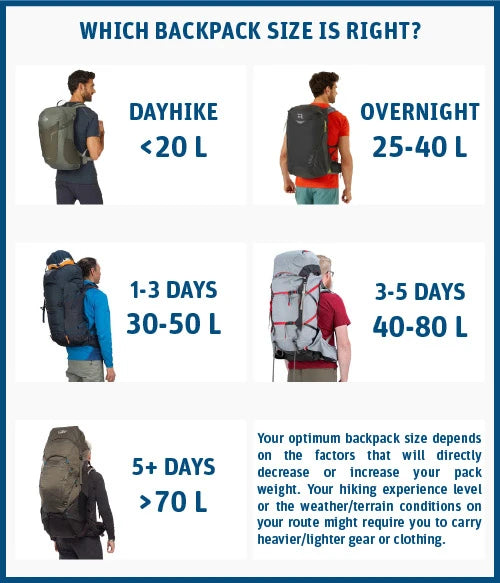
Litre measurement is the most common way to compare bag volumes across brands. A compact 20–30L pack suits day hikes & quick city breaks, while a 40–60L model can hold clothing, electronics & a few extras for mid-length trips. Larger 60L+ designs are reserved for extended travel or scenarios where bulkier gear like camera bodies or camping equipment is needed. Pay attention to external pockets & expandable sections, since they affect usable volume. Select a capacity that aligns with your packing list & physical strength, ensuring the combined weight does not exceed your personal comfort ceiling.
| Trip Duration | Recommended Capacity |
|---|---|
| Weekend (1–3 days) | 20–35L |
| Short Break (4–7 days) | 35–50L |
| Weeklong (7–10 days) | 50–60L |
| Extended (10+ days) | 60–80L+ |
| Special Gear | Varies by item |
Checking Airline Carry-On & Checked Luggage Rules
Most budget carriers restrict cabin bags to around 45 linear inches (height + width + depth) & a weight between 7–10 kg. Larger backpacks often slip into the hold, but fees & handling may vary. International flights can have stricter limits than domestic services. Consider a bag with a detachable daypack or multiple access points to meet specific requirements if you switch carriers. Compression straps help shrink its profile, allowing you to adapt storage capacity when transferring between compartments. Always verify the latest regulations on each carrier’s site before departure to ensure full compliance.
-
Check linear inch limits per carrier
-
Weigh your packed bag on a scale
-
Use compression straps for versatility
-
Separate daypack for cabin-friendly items
“Selecting the right bag size can transform your travel comfort & efficiency.” – Nicola Swaniawski
Key Features That Affect Backpack Dimensions
Beyond raw volume, built-in elements shape how much gear truly fits. A frame sheet or internal frame adds structure but can limit internal storage zones. External pockets increase carry options for quick access items, while side zippers or clamshell openings improve loading ease. Hydration sleeves & laptop compartments occupy space inside the main cavity. Expandable collars or zippered gussets can boost capacity temporarily but may make the bag less streamlined in tight spaces. Balance weight distribution features such as a load lifter, sternum strap & padded hip belt to optimize space without compromising comfort.
| Feature | Dimension Impact |
|---|---|
| Internal Frame | Rigid structure limits cavity |
| External Pockets | Adds bulk to sides/front |
| Expandable Gusset | Increases depth temporarily |
| Hydration Sleeve | Sets aside main space |
| Laptop Compartment | Reserves panel volume |
How to Measure for a Comfortable Fit
Matching a pack to your torso & hip dimensions prevents strain & keeps the bag from shifting. First, find your torso length by measuring from the C7 vertebra at the base of your neck to the top of your hip belt line. Next, measure the width of your hips where the belt will rest to select an adjustable hip belt size. Check shoulder strap positions & load lifter angles to ensure they can be shifted to your frame. Finally, try the bag with a 2–5 kg simulated load to see how your back feels when loaded. A secure fit encourages proper posture & reduces swinging movements.
-
Measure torso from C7 to hip line
-
Check hip belt circumference
-
Adjust shoulder straps for snug fit
-
Test with simulated load weight
Packing Strategies to Maximize Space
Smart packing techniques make the most of every litre in your bag. Rolling garments saves space & minimizes wrinkles, while compression sacks reduce bulk for jackets or extra layers. Place heavier items close to your spine & near the belt to stabilize the center of gravity. Reserve external pockets for quick-grab essentials such as maps, snacks or water bottles. Use labeled packing cubes or folders to segment clothing types this keeps smaller items in view & allows you to remove a single cube without unpacking the entire bag on the road.
| Strategy | Benefit |
|---|---|
| Rolling Clothes | Maximizes volume |
| Compression Sacks | Reduces bulk further |
| Load Heavy Low | Enhances balance |
| Use Packing Cubes | Improves organization |
| External Pockets | Fast access to essentials |
Maintaining & Caring for Your Backpack
A durable bag can last for years if you treat its fabric & components with care. After each trip, empty pockets & wipe the interior with a damp cloth. Inspect zippers, buckles & stitching for signs of wear; replace damaged parts promptly to extend lifespan. Air dry the pack completely before storage to prevent mildew & odors. Store in a cool, dry place away from direct sunlight to preserve color & material integrity. If your pack is machine washable, follow the manufacturer’s instructions & use a gentle cycle to avoid frame damage.
-
Empty & clean interior after use
-
Lubricate zippers & inspect seams
-
Dry fully before storage
-
Keep in a shaded, ventilated area
Comparing Popular Backpack Sizes & Models
To simplify model selection, compare feature sets & volume ratings across well-known options. Brands often label packs by litre capacity & market segment day packs for casual outings, travel packs with integrated organization, & expedition packs engineered for gear-rich trips. Studying user feedback highlights how listed capacity translates to actual carry space. Note that two 50L bags from different manufacturers can vary by external attachments & pocket design, which influences usable room. Place your checklist side by side to find the mixture of comfort, durability & space that matches your style & budget.
| Model | Capacity (L) | Ideal Use |
|---|---|---|
| AlpineTrail 30 | 30 | Day Hikes |
| CityCruiser 45 | 45 | Weekend Trips |
| GlobalRoam 55 | 55 | Multi-Day Travel |
| TourMate 60+ | 60 | Extended Trips |
| AdventureMax 75 | 75 | Expeditions |
I recall when I first tested a 45L pack during a two-week trek through coastal regions. The fit across my shoulders & hips felt balanced, & I managed to store enough layers, snacks & camera gear without feeling cramped. My selection process followed the principles in Travel Backpack Size: How to Choose the Right Bag for Your Trip, weighing capacity, feature set & airline compliance. That hands-on trial confirmed that a mid-range volume delivered versatility, comfort & adherence to most belt scales. Ever since, I prioritize a model that offers modular organization & adjustable sizing for each stage of my travels.
Conclusion
Choosing the ideal travel backpack size pairs an honest review of your luggage needs with practical checks on capacity, fit & airline allowances. By listing trip length, clothing requirements & gear demands, you can align recommended volume ranges with personal comfort thresholds. Features such as frame design, pocket layout & expandable panels influence how much you can carry, while measurement routines ensure load stability. Regular maintenance keeps your pack in top shape, extending its use across countless adventures. Apply these actionable steps to find the right bag for your trip, ensuring each outing is as smooth as possible.
FAQ
What is the ideal backpack size for a weekend trip?
A weekend excursion typically requires a 20–35L pack, offering enough room for two or three days of clothing, toiletries & small accessories while remaining cabin-friendly on most airlines.
Can I use a large backpack as carry-on luggage?
You can, only if it meets the carrier’s combined height, width & depth limits. Compression straps & detachable daypacks help adjust external dimensions to pass gate checks.
How do I translate litres into practical space?
Consider that a litre equals roughly one kilogram of water; therefore, a 40L bag can contain forty standard drinking bottles worth of volume. User reviews often note how full or empty a bag feels.
Are expandable compartments reliable?
Yes, as long as zippers & seams are reinforced. They offer temporary increases in capacity but should be secured tightly to avoid unwanted expansion during travel.