

Choosing the perfect handbag isn’t just about style—it’s about finding the right size that fits your lifestyle and needs. But how do you know if a bag is too big, too small, or just right for you?
That’s where a clear handbag size guide comes in. You’ll discover simple steps to measure any handbag accurately, understand what those numbers mean, and pick a size that matches your daily routine. Whether you want a roomy tote or a compact crossbody, this guide will help you make confident decisions every time you shop for a new bag.
Keep reading to unlock the secrets of handbag sizing and find your perfect match!


Measuring Handbag Dimensions
Measuring handbag dimensions helps to understand its real size and capacity. Accurate measurements make choosing the right handbag easier. Four key dimensions give a clear picture of a bag’s size.
Use a ruler or tape measure for precise results. Place the empty bag on a flat surface before measuring. Start with the length, then height, depth or width, and finally the handle or strap drop.
Length Measurement
Measure across the front of the bag from left to right. Take the longest points on each side. This shows how wide the bag is. Length is usually the first number in size descriptions.
Height Measurement
Measure vertically from the bottom to the top edge of the bag. Do not include handles or straps in this measurement. This tells how tall the bag stands on its own.
Depth And Width
Measure from the front of the bag to the back. This shows how much space the bag offers inside. For bags with curves, measure at the widest part. Depth helps to understand the bag’s volume.
Handle And Strap Drop
Measure from the top of the strap to the bag’s opening. This shows how the bag will hang when carried. Drop length affects comfort and style. Include this dimension for a complete size view.
Tools For Accurate Measurement
Accurate measurement is key when choosing the right handbag size. Using the proper tools ensures precise dimensions. This helps you find a bag that fits your needs perfectly. Two common tools for measuring handbags are rulers and tape measures. Both offer easy ways to capture length, height, and depth accurately.
Using A Ruler
A ruler provides a straight edge for measuring handbag dimensions. Place the handbag on a flat surface first. Align the ruler with the area you want to measure, such as the width or height. Measure from one edge to the other carefully. A ruler works best for smaller bags or when you measure flat surfaces. Make sure to read the ruler’s scale correctly for exact numbers.
Using A Tape Measure
A tape measure is flexible and ideal for handbags with curves. Lay the bag flat or hold it steady. Wrap the tape measure around the bag’s widest part to get the width. For height, measure from the bottom to the top edge, excluding handles. Depth is measured from front to back. A tape measure also helps measure strap drop length accurately. It adjusts easily to various shapes and sizes.
Step-by-step Measurement Process
Knowing the exact size of your handbag helps you choose the right style. Measuring a handbag is simple if you follow the right steps. This step-by-step measurement process will guide you through each dimension. You will learn how to measure length, height, depth, and handle drop accurately. These measurements give a clear idea of the bag’s size and usability.
Prepare The Bag
Place the handbag on a flat surface. Make sure it is empty and closed. Smooth out any wrinkles or folds. This helps get accurate measurements. Use a ruler or measuring tape for best results.
Measure Length
Measure the width across the front of the bag. Start from the longest point on the left side. Stretch the tape or ruler to the longest point on the right side. Record the number in inches or centimeters. This is the bag’s length.
Measure Height
Measure from the bottom of the bag to the top edge. Do not include handles or straps. Hold the tape straight to get a true height. Note this number carefully for your size guide.
Measure Depth
Measure from the front of the bag to the back. This shows how deep the bag is. It tells you how much the bag can hold inside. Take the widest point for best accuracy. Record the depth measurement clearly.
Measure Handle Drop
Measure from the top of the handle or strap down to the bag’s opening. This is the handle drop length. It shows how the bag will sit when carried. Use a tape measure for a precise number. This helps understand the carrying style and fit.
Tips For Measuring Curved Bags
Measuring curved handbags can be tricky. Their shape makes it hard to get exact size. Use simple tips to measure them accurately. These tips help you find true dimensions and compare with other bags.
Find Widest Points
Look for the bag’s widest part. Curves can hide the full width. Place the bag on a flat surface. Use a ruler or tape measure. Measure from the leftmost to the rightmost point. Measure height at the highest curve. Measure depth at the bulgiest part. These points show the bag’s real size.
Compare With Existing Bags
Have bags you already own? Use their sizes to compare. Measure your old bag the same way. Check length, height, and depth. Compare these with the new curved bag. This helps you understand how big the new bag feels. It avoids surprises when you buy online or in stores.
Standard Handbag Sizes
Understanding standard handbag sizes helps in choosing the right bag for daily use. Sizes vary widely but follow general patterns that make shopping easier. Knowing common dimensions and size categories clarifies what each bag offers in space and style.
Common Dimensions
Standard handbag sizes use three key measurements: length, height, and depth. Length is the width across the front, measured from left to right. Height measures from the bottom to the top edge, excluding handles. Depth shows how far the bag goes from front to back. These dimensions combine to describe the bag’s overall size. Handle or strap drop is also measured. It shows how long the strap hangs when carried. These figures help compare bags and decide which fits your needs best.
Size Categories
Handbags typically fall into small, medium, and large categories. Small bags hold essentials like phones and wallets, usually under 8 inches wide. Medium bags range from 8 to 12 inches and fit more items comfortably. Large bags exceed 12 inches and carry larger loads or extra items. Some brands add extra categories like mini or oversized. These labels guide buyers on capacity and usability. Size choice depends on personal style and daily requirements.

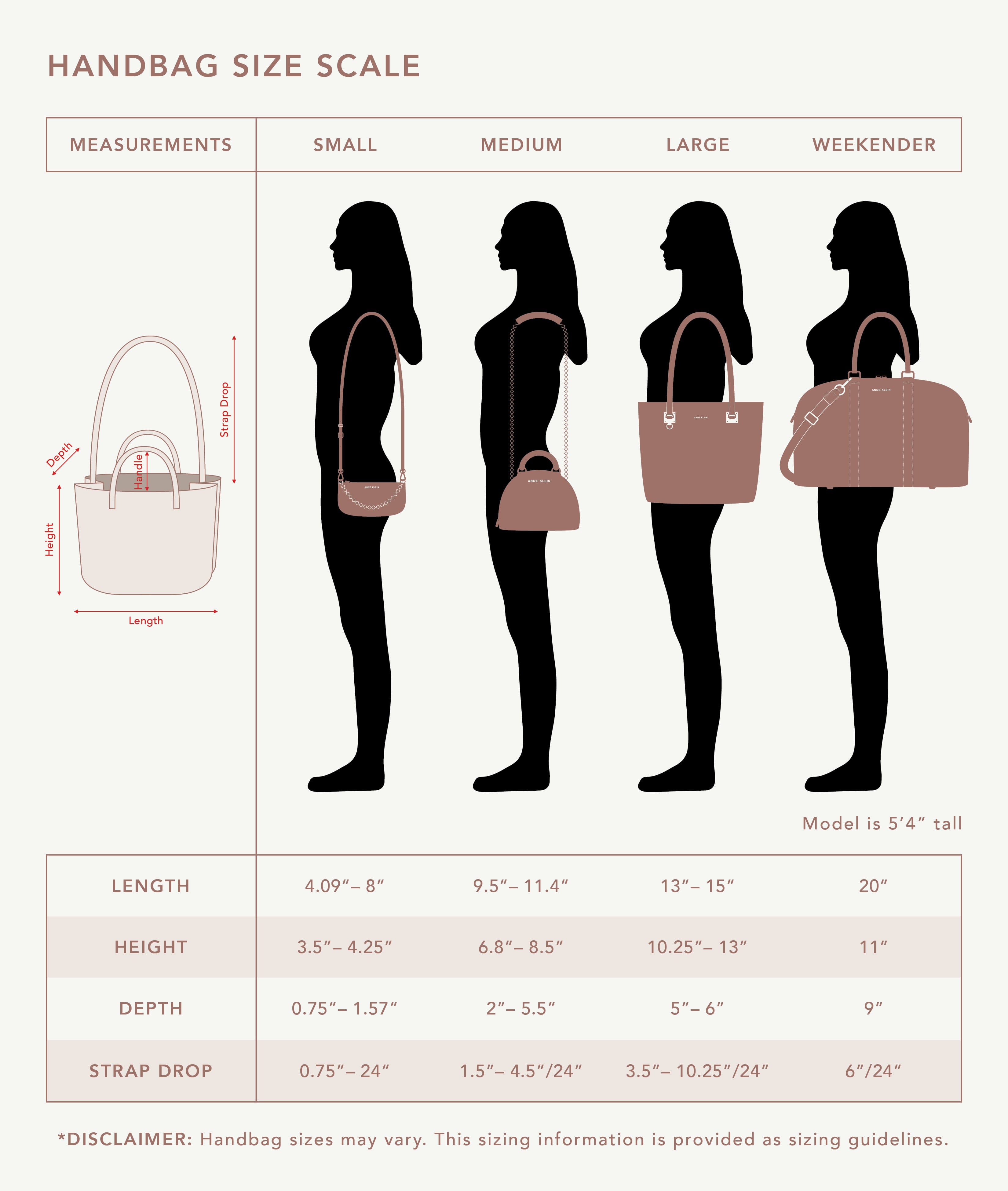
Matching Bag Size To Body Type
Choosing the right handbag size for your body type enhances your overall look. The bag should complement your frame and not overwhelm it. A well-matched handbag balances proportions and adds style effortlessly. Understanding which size suits your body helps you carry your essentials comfortably and fashionably.
Small Bags For Petite Frames
Petite frames pair best with small bags. These bags do not overpower a smaller body. Mini crossbody bags or clutches fit well and maintain balance. Small bags keep your look delicate and neat. Avoid large bags that can swallow your silhouette.
Medium Bags For Average Builds
Medium-sized bags suit average body builds perfectly. They offer enough space without looking too big or too small. Tote bags, satchels, and medium shoulder bags work well here. Medium bags create a balanced and polished appearance. They blend style with practicality for daily use.
Large Bags For Taller Frames
Taller frames can carry large bags with ease. Oversized totes and large hobo bags complement longer torsos and legs. Large bags add presence and proportion to taller bodies. They provide ample room for all your belongings. Avoid small bags that may look out of scale.
Choosing Storage For Your Handbag
Choosing the right storage for your handbag keeps it safe and in good shape. Proper storage stops dust, dirt, and damage. It also helps maintain the bag’s form and color. Knowing how to pick the right box and protect your handbag is important for every owner.
Selecting The Right Box Size
Pick a box that fits your handbag comfortably. The box should be slightly bigger than the bag. This space allows air to flow and prevents squishing. Avoid boxes that are too tight or too large. Too small boxes can damage the bag’s shape. Too large boxes let the bag move and get scratched.
Use a sturdy box with smooth edges. Cardboard or plastic boxes work well. Choose a box with a lid to keep dust out. Make sure the box is clean and dry before storing your handbag inside.
Protecting Your Handbag
Wrap your handbag in soft cloth or dust bags. This protects the surface from scratches and dust. Avoid plastic wraps that can trap moisture. Moisture causes mold and stains on leather bags.
Stuff the bag with acid-free tissue paper. This helps keep its shape and stops creases. Store the handbag in a cool, dry place away from direct sunlight. Sunlight can fade colors and dry out materials.


Frequently Asked Questions
How To Measure Handbag Size?
Place the handbag on a flat surface. Measure length (left to right), height (bottom to top, excluding handles), and depth (front to back). Also, measure the handle drop from strap peak to bag opening. Record these dimensions as L x H x D for the handbag size.
What Is A Standard Handbag Size?
A standard handbag size typically measures about 12-14 inches in width, 8-10 inches in height, and 4-6 inches in depth. These dimensions suit daily essentials and offer comfortable carrying options.
How To Determine The Size Of A Bag?
Measure the bag’s width from left to right, height from top to bottom (excluding handles), and depth from front to back. Also, measure the strap drop from the top of the strap to the bag opening for a complete size overview.
How To Check Hand Bag Size?
Place the handbag on a flat surface. Measure width (left to right), height (bottom to top, excluding handles), depth (front to back), and handle drop (strap top to opening). Use these dimensions (L x H x D) to determine the handbag size accurately.
Conclusion
Choosing the right handbag size helps you stay organized and comfortable. Measure length, height, depth, and strap drop carefully. Compare your measurements with bags you own for accuracy. A well-measured bag fits your needs and style perfectly. Keep these simple tips in mind when selecting your next handbag.
Size matters, but comfort and function come first. Use this guide to make smart handbag choices every time.
